
OUR HISTORY
Indigenous culture teaches us to be men in the same way the sky is in relationship to the earth: to provide a safe place for creation to thrive. As a tribal people, we hold a responsibility to honor and respect one another, acting without violence, anger, or brutality – especially towards the ones we love.
Our history is not one without darkness. Western colonization brought with it destruction and disorder – our people were hunted, women and children beaten, raped, and treated without regards to humanity.
A lingering trauma exists among our people. The destruction of our traditional ways of life and the separation and removal of our family structure along with Western influence brought with it violent and abusive behaviors.
This is why we are here: to remind our brothers that there are better ways to resolve conflict and bring about healing by reclaiming and using our traditional teachings to heal our community one man at a time.


OUR METHODS
We work to move men in a positive direction away from violence and abuse. We do so by using our cultural teachings to heal and empower men to engage their relatives in more aware and loving relationships free of violence. Once of the practices that we use locally on the Rosebud is to partner men with horses.
Horses have the ability to connect, heal, and empower those that come into contact with them. Just as those we work with have experienced trauma and hardship in their lives, our horses have all endured their own difficulties and suffering, and by nature, take it upon themselves to relieve others of their pain.
OUR SYMBOL
There is meaning behind everything surrounding us. We chose to recognize and embrace these meanings and incorporate them into the very core of our efforts, beginning with our symbol.
Traditionally our directional colors are Black, Red, Yellow and White. The directions were created starting in the West. Our colors have been intentionally rearranged to illustrate that we as men are lost and are in need of finding our way. We have left the Black being the first direction in the original place to further illustrate that our culture holds within it the ability and teachings to shape healthy men free of toxic masculinity.
Black stands for the darkness within each man that he must address and forgive himself for in order to move forward in his individual journey.
The color white represents light, goodness, purity, and the rebirth that the men of our program undergo.
Red represents the Buffalo People and the strength of our community, our programs, and our teachings.
Yellow embodies the wisdom, understanding, and awareness gained through the experiences of our program for the wellbeing of our society.
WHO WE ARE
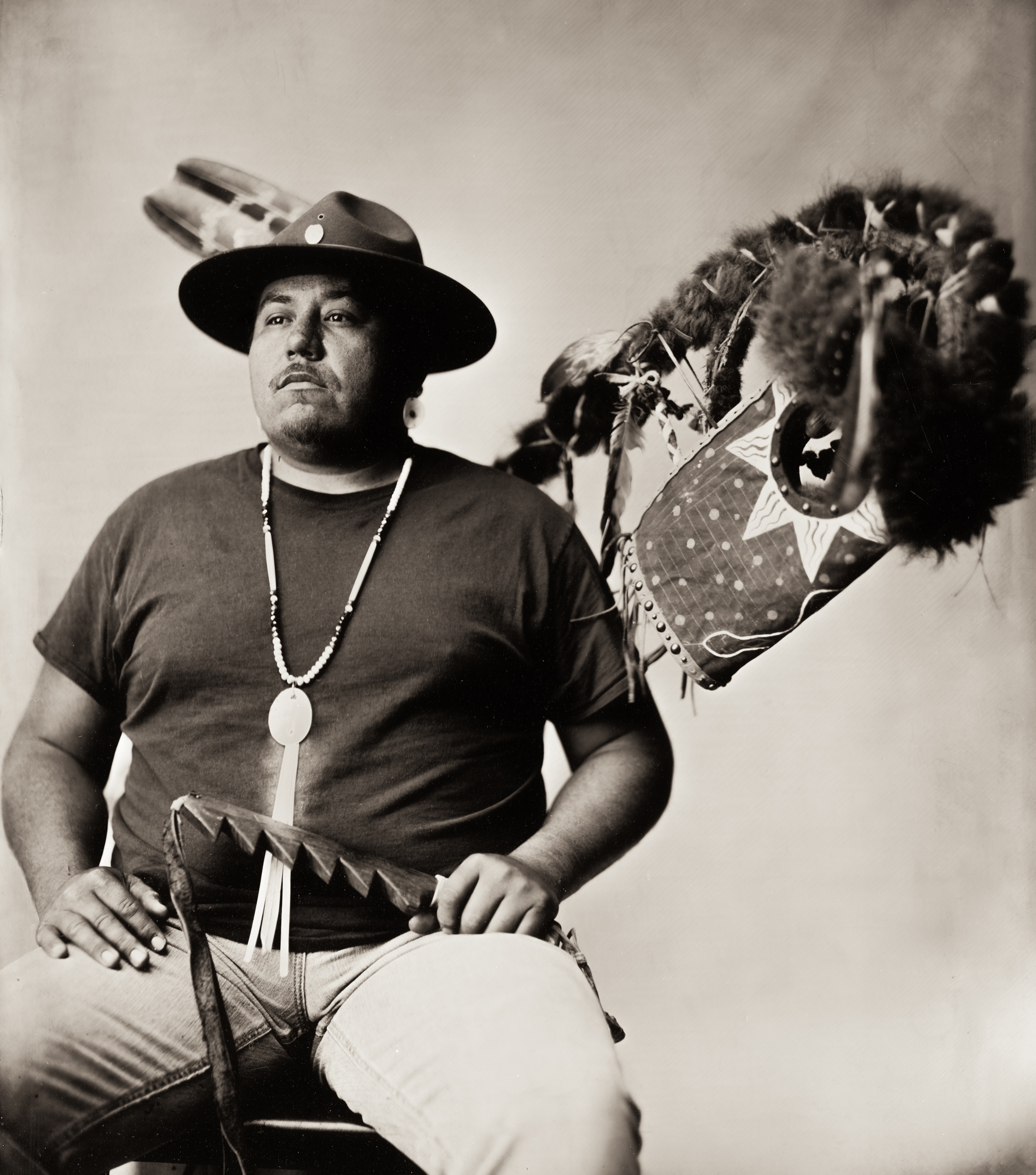
Greg Grey Cloud
Co-Founder
Greg Grey Cloud is co-founder of Wica Agli, an enrolled member of the Crow Creek Sioux Tribe,
and has been actively involved in domestic violence education awareness for the past 6 years.
He currently sits as an advisor on Force. Force is a national organization that has brought men
and women together developing safe spaces for victims and survivors of sexual assault to share
their stories and create national conversations to create avenues to stop rape culture. Greg has
been recognized for his activism and has received several environmental awards for his work
and sit on the national climate leadership network. This group consists of 25 young men and
women across the nation fighting to stop climate change as well as bring awareness of the
intersections of DV/SA in extraction industries. Greg is a passionate grassroots activist who
advocates for the protection of my nation’s women and children.
Jeremy NeVilles-Sorell
Co-Director
Jeremy NeVilles-Sorell has worked in the field of domestic violence since 1994 on issues
affecting children who have experienced domestic violence, supervised visitation, batterer’s
intervention, and providing training and education. With the Domestic Abuse Intervention
Project (DAIP) he worked for four years coordinating the Duluth Family Visitation Center
serving families with a history of domestic violence and dealing with visits and exchanges of
children between parents. He also ran DAIP’s men’s reeducation classes (batterer’s intervention
program) from 1997 to 2000. Jeremy also worked for four years as the Children’s Program
Coordinator at Women’s Transitional Housing Coalition in Duluth, Minnesota, providing
activities and groups for children who have witnessed violence. He joined the staff of Mending
the Sacred Hoop Technical Assistance Project in 1998, a national program to assist American
Indian Tribes and Alaskan Native Villages to develop responses to violence against Indian
women through training and technical assistance. He has held various titles with Mending the
Sacred Hoop from team leader, program coordinator, co-director, and Training and Resources
Director. He was faculty for the IHS-ACF Health Domestic Violence Project for its duration:
2002-2009. This project worked with more than 100 Indian, Tribal and Urban health care
facilities as well as domestic violence (DV) advocacy programs across the United States to
improve the health care responses to domestic violence. From 2017 – 2019 he served on the Men
of Color as Crime Victims Expert Working Group for the OVC National Resource Center for
Reaching Victims. In 2015 he began working with Wica Agli and in March of 2019 he left
Mending the Sacred Hoop and assumed the position of Director of the National Native Coalition
of Men’s Programs with Wica Agli and became Co-Director in 2020. He has conducted groups
with teenage boys and girls on domestic violence, facilitated groups for Native men who have
battered, been an advocate for male victims, developed curricula for engaging men in violence
prevention, organized community education events, and coordinating a project on healing and
wellness for native men, two-spirit/gay men, male identified, and boys who have been sexually
assaulted. Jeremy has been a speaker and consultant for many national, state, and local programs
on youth issues, community education, working with men, and worked on public policy
reform. He remains involved with community groups and local educational efforts to raise
awareness engage and promote non-violent lifestyles for men.
CONTACT US

Wica Agli
PO BOX 1161
Mission, SD 57555